
This guide is for the estimator at a sign shop who is drawing up a proposal and has to put a lighting type on it. The client asked for a sign that glows; the drawing needs a name.
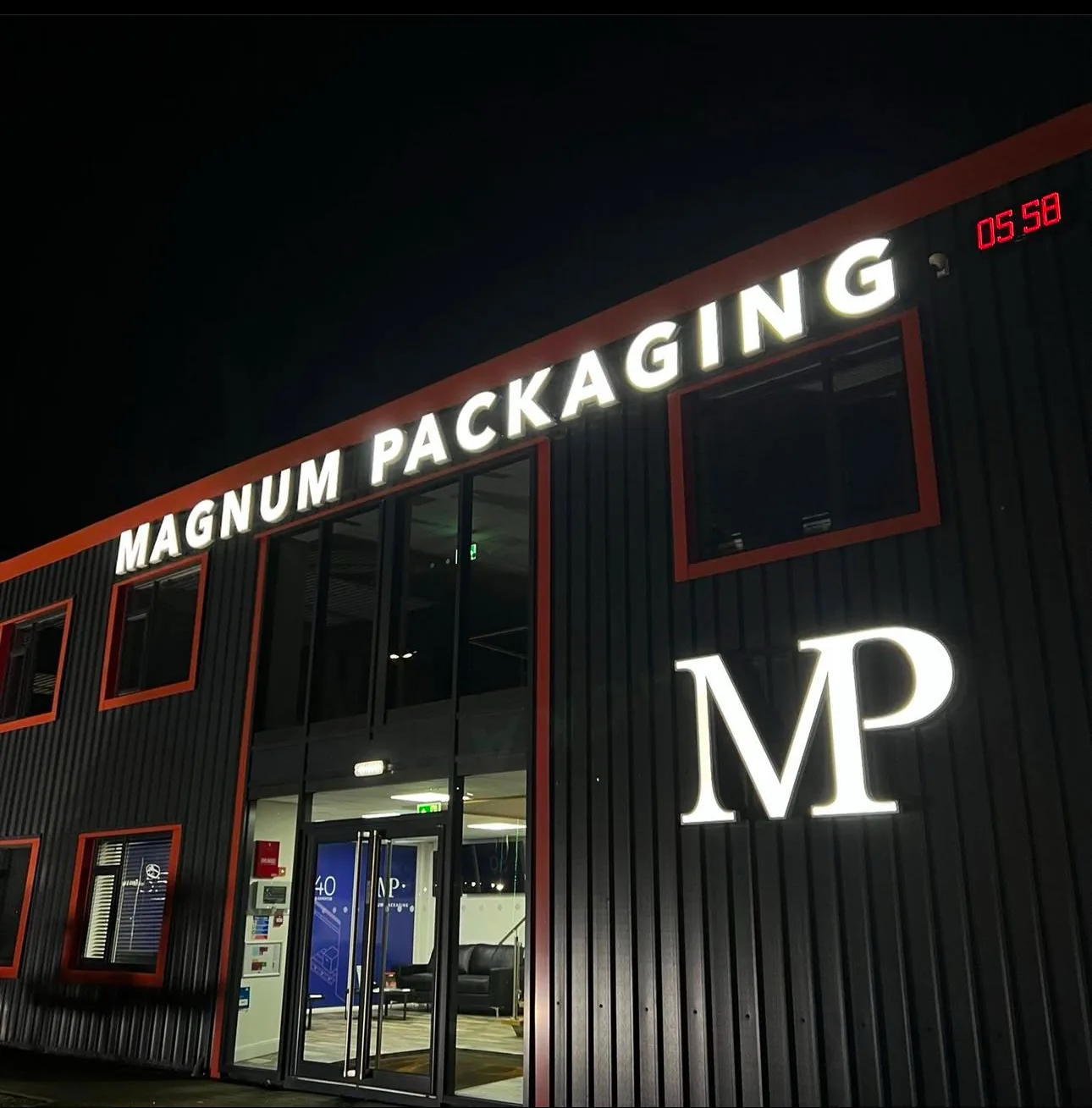
A client who wants a glow can mean two opposite signs. On a front lit (face-lit) letter the face lights and the wall stays dark. On a reverse lit (halo-lit) letter the face stays dark and the wall glows. Choose front lit when the name has to read at night. Choose reverse lit when the wall is light and matte enough to return the halo. A dark fascia means front lit, or reverse lit on a light backer panel.
Two names for each type, and the UK terms
Both are channel letters. The names change from shop to shop, which is how the wrong type gets quoted.
| Write on the drawing | You will also hear | What lights |
|---|---|---|
| Front lit | face-lit, internally illuminated | The face of the letter |
| Reverse lit | halo-lit, reverse channel letters, backlit | The wall behind the letter |
In the UK, channel letters are built-up letters and reverse lit is halo illuminated. “Backlit” gets used for more than one thing, so write “reverse lit (halo-lit)” and nobody has to guess.
What each type looks like by day and at night
Front lit. By day you see the printed face inside a stainless rim, with painted returns. At night the face of each letter lights; the returns stay dark, with no glow on the wall behind.
Reverse lit. By day it reads as a solid metal letter standing off the wall. At night the wall glows; the face reads as a silhouette. That silhouette is the trade-off. Sign makers on trade forums report that a halo alone is harder to read at night than a lit face, and that lighter surfaces reflect the halo better. A dark or glossy wall gives little of it back.
What is inside each letter
Here is how we build each type in Hanoi.
The visible rim on our front lit letters is stainless, not a plastic cap; the face is a printed polycarbonate insert behind it. LED modules inside the letter light that insert from behind, and the returns are painted to your spec.
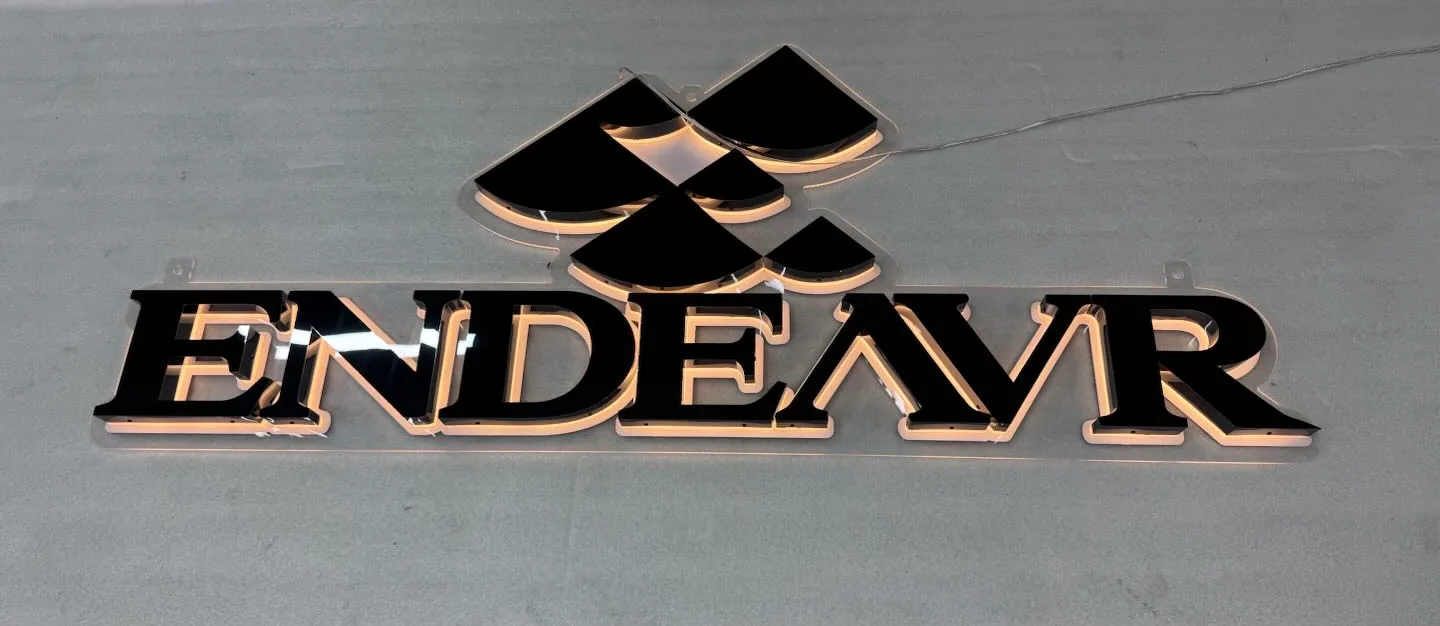
A reverse lit letter is the opposite build: solid metal face, LED modules firing back through a frosted acrylic base onto the wall. No light leaves through the front.
LED modules and power supplies are UL Recognized / UL-listed components. If your client’s city or landlord requires a UL label on the complete sign, tell us before production.
Both belong to one product line: front lit, reverse lit (halo-lit), trimless or open face channel letters.
How each type mounts on the wall
Mounted flush, each letter goes on the wall by itself, with its own lead marked + and −.
A front lit letter has a back that your crew screws to the wall first; the letter then closes over it and locks with screws on the side.
A reverse lit letter stands off the wall on threaded studs. The gap behind it is where the halo comes out, so the wall is part of the sign. It can also sit on a backer panel. A backer gives a reverse lit (halo-lit) letter an even surface to light when the wall is rough or ribbed, and it is painted here to the color on the drawing.
Every channel letter crate also holds the 1:1 paper pattern, mounting hardware, mounting drawings and the install guide. Raceway, backer panel and flush mount are compared in channel letter mounting options.
Hanging the sign and connecting power stay with your crew. See what install-ready means for the full split of work.
How to choose the type for a wall
- Look at the wall. A light, matte wall reflects a halo. A dark, glossy or ribbed wall reflects little, or unevenly.
- Decide what has to read at night. If it is the name, use front lit. If a silhouette against a lit wall is enough, reverse lit works.
- Change the surface if the client wants the halo anyway. Put the letters on a backer panel in a light color.
- Name the type for each element. More than one type in one set is a normal order: front lit and reverse lit together, or front lit letters with a reverse lit (halo-lit) logo.
You approve a mockup before production: the sign on your site photo or as dimensioned artwork, with overall size and lighting type. Changes after mockup approval are chargeable.
After the build, every lit set is tested before it is packed, and you see the photos before it ships. The reverse lit set pictured above is on that bench.
A checklist for the drawing
- Lighting type for each element: front lit (face-lit) or reverse lit (halo-lit)
- A photo of the wall that shows its color and surface
- Colors for faces and returns, by PMS or RAL code
- LED color: warm white, cool white or a color
- Mounting, if your landlord specifies it
- Artwork, and letter height or overall width
Questions about front lit and reverse lit letters
Are halo-lit and reverse lit channel letters the same thing?
Yes. Halo-lit, reverse lit and reverse channel letters all name one build: a solid face, with the light thrown back onto the wall. Some shops also say backlit. A flat backlit metal logo also lights the wall, but it is a different build; see halo lit vs backlit: a flat metal logo or channel letters.
Is reverse lit harder to read at night than front lit?
It can be. The face is a dark silhouette, so legibility depends on how much light the wall gives back. A light, matte wall helps. If the name has to read at night on a dark wall, specify front lit.
Can one sign use both types?
Yes. A set can mix them, for example a halo-lit logo next to front lit letters. Specify the type per element on the drawing.
Send the request
Put the lighting type on the drawing and add a photo of the wall. Send us your artwork and target quantity. You get a quote within 24–48 hours and a mockup for approval.